
Kordil Port Sharing
Kordil Port Sharing
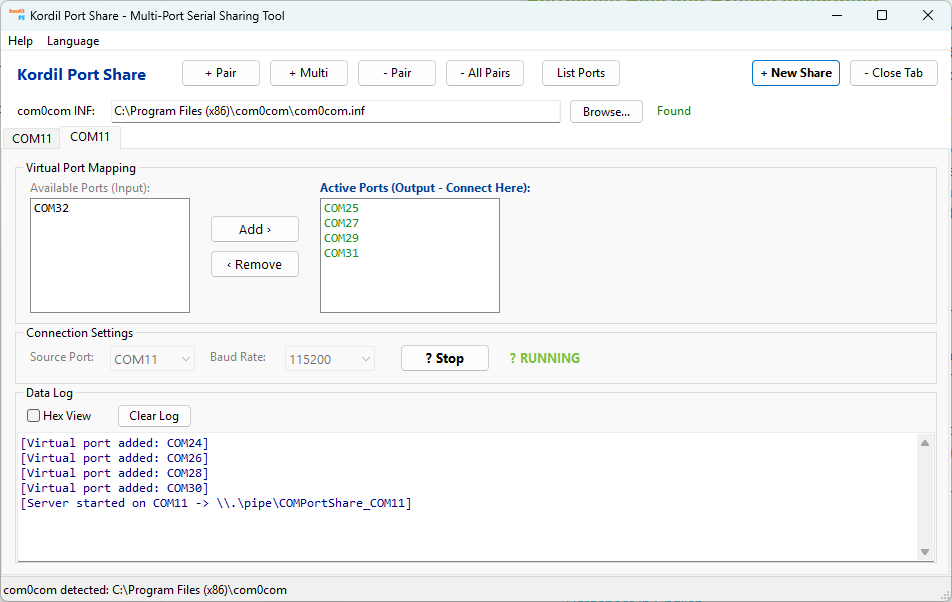
Kordil Port Sharing is a Kordil utility for sensor-data connection sharing in surveying and positioning workflows. It addresses installations in which more than one application needs access to information from the same data source.
Data sharing in survey systems
Information from a GNSS receiver or another sensor may be required by a navigation display, a logging program and a monitoring application. The physical connection, data stream and receiving applications therefore need to be planned together. Port sharing is an integration function that helps organise this arrangement; it does not change the accuracy of the measurements produced by the sensor.
Planning the connection
Before installation, identify the source instrument, port, connection parameters and applications that will receive the data. Message content and update rate should be checked against each application requirement. Exclusive access by one program, or commands sent to a source by multiple programs, must be considered during commissioning. The appropriate input and output arrangement depends on the instrument interface and software version.
Field use and verification
Reliable data delivery matters in hydrographic surveying, barge positioning, machine guidance and sensor logging. Commissioning should confirm more than an open connection: the expected messages must arrive in the correct sequence with appropriate timing information. Consistent source data in the operator display and the recording application helps support later review of the operation.
Working with the Kordil software family
Port Sharing is a supporting utility considered alongside Navigation Pro and other survey applications according to the connection requirements of the project. The sensor model, communication method, operating system and receiving programs define the configuration to be checked. For permanent installations, document the connection diagram and port names and verify data flow after a restart. This makes maintenance and fault finding more systematic in the field.