Hydrography / Bathymetry
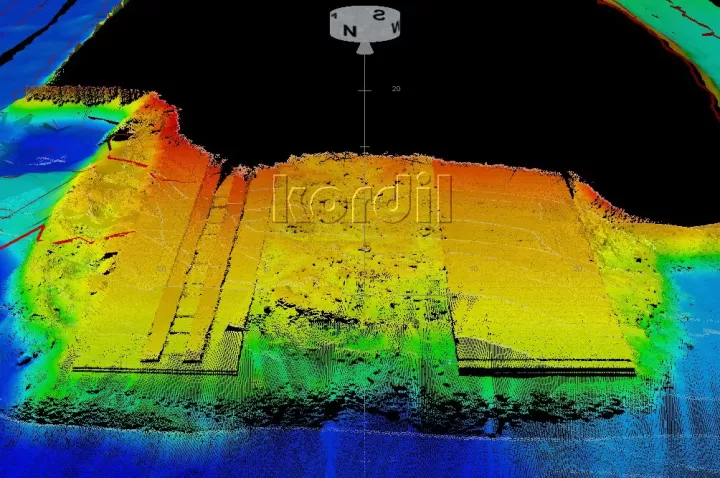
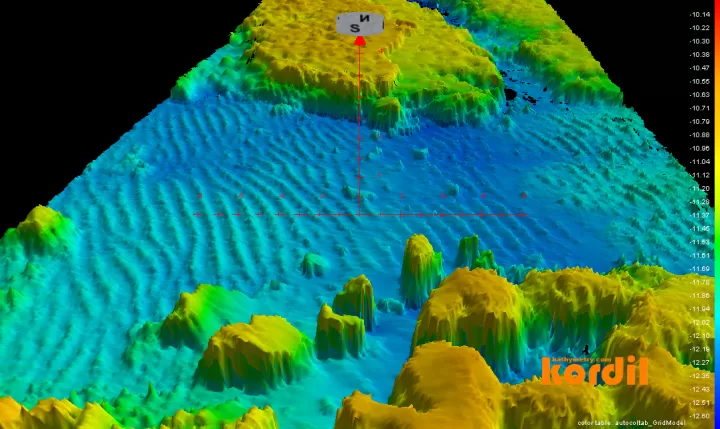
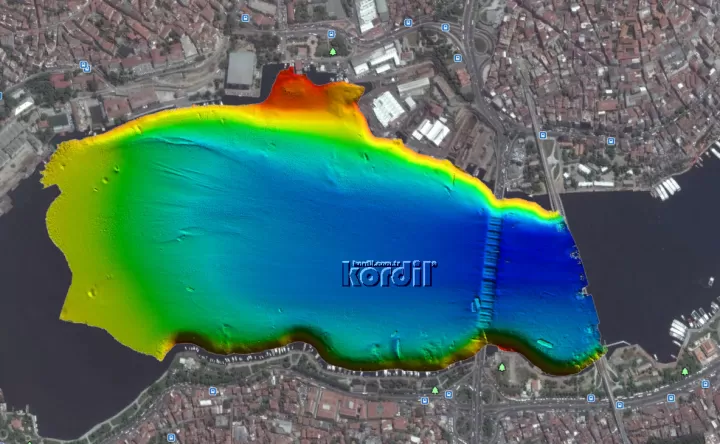
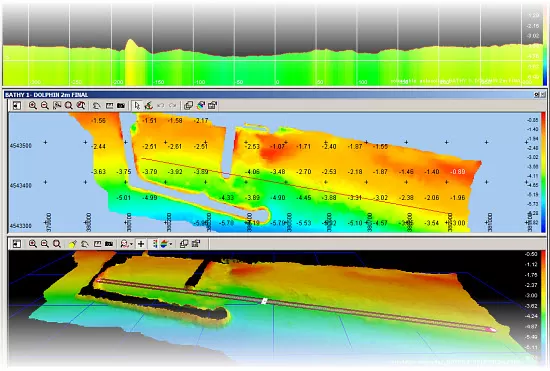
Bathymetric and hydrographic surveys are among Kordil's core areas of expertise. By January 2020, Kordil had surveyed a cumulative area of approximately 1 million hectares. Alongside survey services, Kordil develops bathymetry systems, including the KBS200 and KBS30200 singlebeam echosounders, and Kordil Bathymetry Studio software for bathymetric data acquisition and processing.
Our bathymetric survey services include:
- Bathymetric surveys for ports, harbours, cable and pipeline routes, dredging and marine construction
- Integrated multibeam, singlebeam and side-scan sonar surveys, with backscatter and water-column data where required
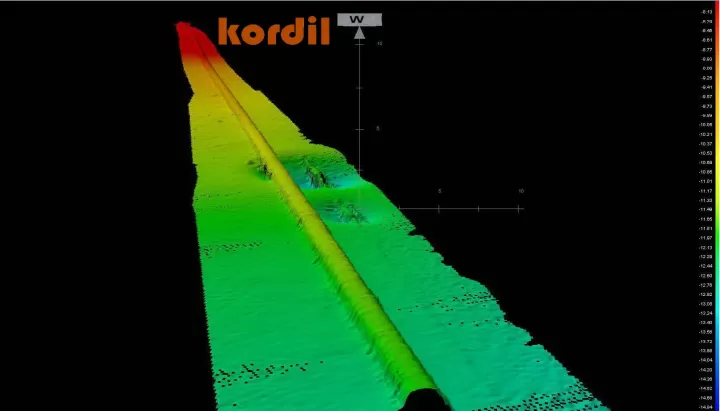
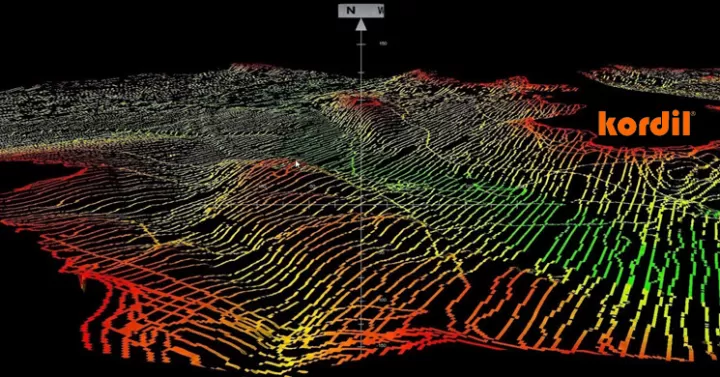
- Seabed mapping and obstacle detection, with survey accuracy and coverage matched to project requirements
- Cost-effective single- and dual-frequency singlebeam surveys
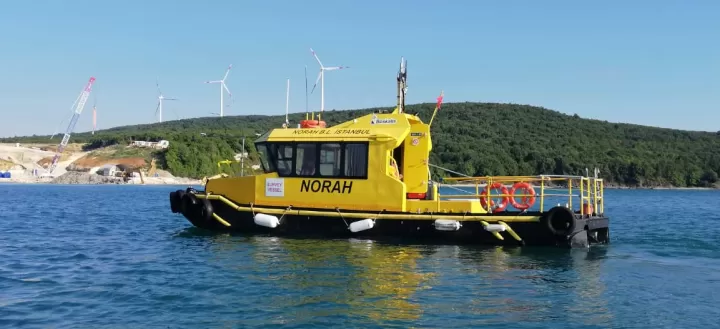
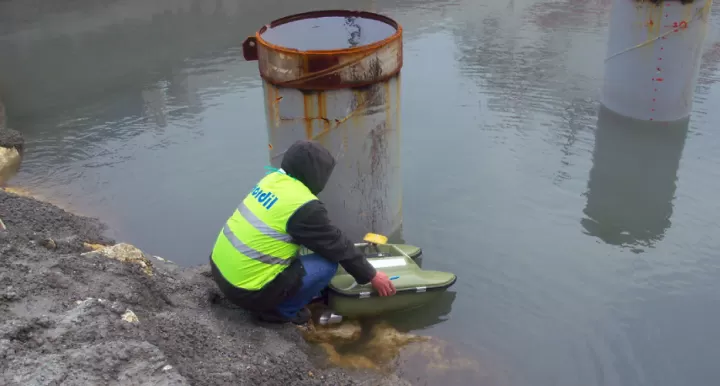
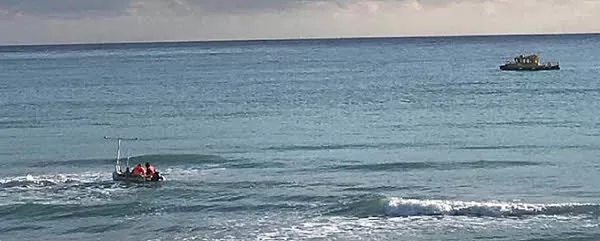
- Surveys of ponds, discharge pools, rivers and channels using uncrewed surface vessels (USVs)
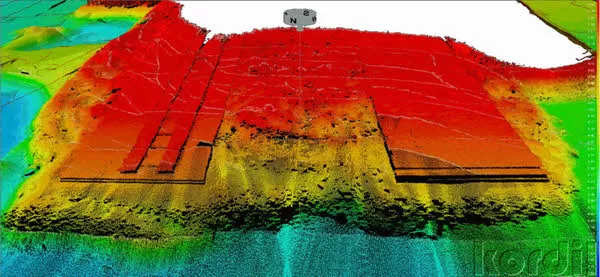
- USV-mounted multibeam surveys for seabed mapping and submerged-structure inspection
From survey planning and field measurements to data processing, Kordil supports projects with depth maps, seabed models, cross-sections and volume calculations. We can also help you select a bathymetry system for your own survey team. Share your project location, water depths, survey area and schedule so we can prepare a suitable proposal.
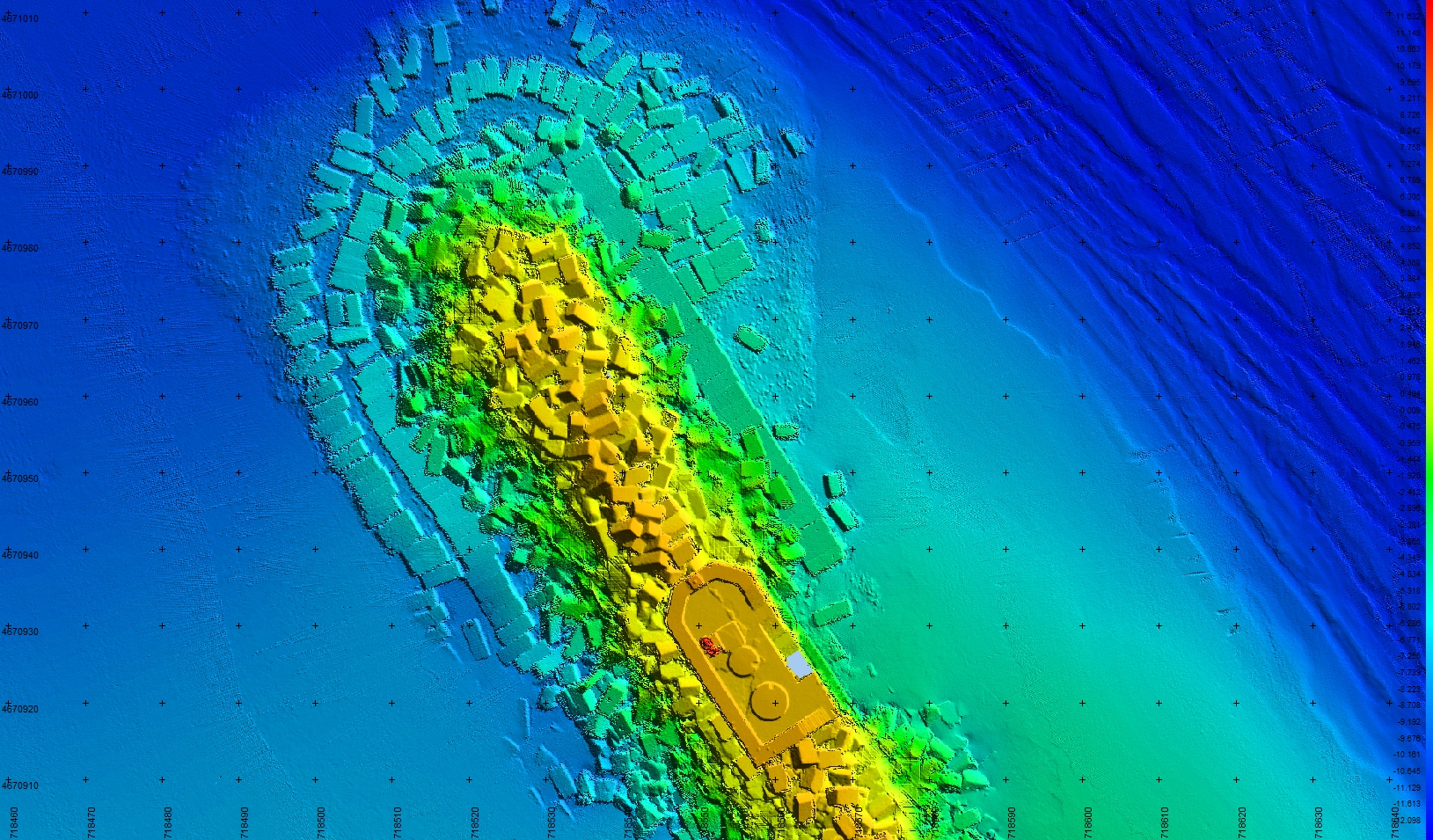
High-Resolution Bathymetry and Seabed Imaging
Kordil provides bathymetric survey solutions using NORBIT and Baywei multibeam echosounders and Ping DSP bathymetric side-scan systems. We match the sonar, positioning and processing equipment to the water depth, required seabed detail, survey platform and project budget.
NORBIT Multibeam Systems and Upgrade Options
NORBIT offers a modular approach to high-resolution seabed mapping. Configurable systems allow the survey package to be selected for current requirements and expanded with compatible hardware, software and survey sensors.
| Parameter | Capabilities and configuration options |
|---|---|
| Survey capabilities | Bathymetry, sidescan imagery, snippets, backscatter intensity and water-column recording, subject to configuration. |
| Operating frequency | WBMS X and WINGHEAD X: 200–700 kHz. WINGHEAD X Midwater: 80–240 kHz. Long-range WINGHEAD B59S: 60 kHz and 200 kHz. |
| Beam width | Beam widths as narrow as 0.3°, varying by model and operating frequency. |
| Depth range | Approximately 300 m for standard models, extending up to 2,500 m for long-range models, depending on configuration and survey conditions. |
| Sounding density | 1024 beams per ping; up to 2048 with the dual-swath option in the referenced configuration. |
| Swath angle | Adjustable coverage up to 210°, varying by model; long-range configurations offer coverage up to 145°. |
| IMU / GNSS/INS options | A choice of Applanix WaveMaster II, OceanMaster and SurfMaster, and SBG configurations including Ekinox and Apogee. Availability depends on the selected sonar and integration package. Roll, pitch, heading, heave and positioning performance vary with the navigation system and processing mode. |
| Roll / pitch accuracy | As fine as 0.005° with post-processing; real-time accuracy from 0.008°, depending on the selected GNSS/INS and processing mode. |
| Heading accuracy | As fine as 0.01°, depending on the selected GNSS/INS, antenna separation and processing mode. |
| Motion stabilisation | Roll, pitch and yaw stabilisation options, depending on the sonar configuration and enabled features. |
| Scanning options | Dual swath for greater sounding density and STX along-track scanning to improve coverage around structures. |
| Installation | Compact vessel or unmanned-platform installation. The referenced integrated configuration has a 6.5 kg wet-end and a single wet-end-to-dry-end interface cable. |
| Expansion | Compatible navigation, processing and additional sensor options can be selected for the project. |
Beam width and maximum depth range depend on the selected model, frequency and survey conditions. Acoustic measurement range is different from the sonar housing’s immersion-depth rating. Sounding-density and wet-end-weight examples refer to the integrated stabilised WBMS X configuration; navigation accuracy depends on the selected GNSS/INS and processing mode. Navigation accuracy is not the total accuracy of a seabed sounding.
Manufacturer specifications: WBMS X, WINGHEAD X, WINGHEAD X Midwater and WINGHEAD B59S.
Baywei Multibeam Systems
Baywei offers compact multibeam systems for small survey boats, unmanned platforms and underwater mapping. M1 is a lightweight point-cloud mapping system; M4 is a standalone sonar for external navigation integration; M5, M7 and M9 combine multibeam sonar with integrated GNSS/INS.
| Model | Swath angle | Acoustic range | Roll / pitch accuracy | Heading accuracy |
|---|---|---|---|---|
| M1 | Up to 150°; 130° with roll stabilisation | >200 m | 0.03°; integrated GNSS/INS | 0.08° RTK |
| M4 | Up to 130° | Approximately 200 m | Depends on the external IMU/GNSS/INS | Depends on the external navigation system |
| M5 | Up to 130° | >200 m | 0.03°; integrated GNSS/INS | 0.08° RTK with 2 m antenna separation |
| M7 | Up to 130° | >200 m | 0.03°; integrated GNSS/INS | 0.08° RTK with 2 m antenna separation |
| M9 | Up to 140° | >200 m | 0.03°; integrated GNSS/INS | 0.08° RTK with 2 m antenna separation |
M1, M4, M7 and M9 provide 512 receive beams; M5 provides 256 receive beams. M5, M7 and M9 specify heave accuracy of 2 cm or 2% with TrueHeave, and 5 cm or 5% in real time. M9 also offers configuration options for electronic beam tilt, water-column data and snippets.
Model names link to manufacturer datasheets. Range depends on installation, water conditions and seabed reflectivity. M4 is stated as approximately 200 m because its datasheet gives both a 200 m maximum in the feature list and >200 m in the specification table. Acoustic range is not the housing immersion rating. Navigation figures describe the specified sensor configuration and are not the total accuracy of a seabed sounding.
Ping DSP Bathymetry and 3D Side-Scan
Ping DSP combines wide-swath bathymetry with side-scan imaging to show both seabed shape and target detail in a common survey dataset.
| Parameter | Capabilities and configuration options |
|---|---|
| Survey outputs | Simultaneous bathymetry, 2D side-scan and true 3D side-scan imagery. |
| Frequency and beam width | An integrated 450 kHz configuration specifies a 0.4° beam width. |
| Swath coverage | Manufacturer-stated coverage up to 14 times water depth, subject to survey conditions. |
| Navigation and sound velocity | Integrated sound-velocity and motion sensors, with integrated or external GNSS/INS options. |
| Size and power example | For the referenced integrated configuration: 56.8 cm long × 9.8 cm diameter, 8.5 kg in air and 25 W typical power consumption. |
| Processing | Real-time 3D point-cloud display, target capture and measurement, with support for compatible third-party hydrographic software. |
| Installation | Compact, low-power arrangements for pole mounting and suitable unmanned-platform integration. |
Numerical examples are from the manufacturer’s integrated 450 kHz configuration. Ping DSP uses bathymetric side-scan technology; its coverage and imaging specifications should not be treated as conventional multibeam beam-count specifications.
Available features and upgrade paths depend on the selected system, hardware and software licences. Kordil can advise on a suitable configuration for the project.
Supporting Survey Equipment
- GNSS positioning, dual-antenna heading and INS or IMU motion compensation.
- Sound-velocity measurement at the sonar and water-column sound-velocity profiling.
- Survey mounting arrangements, measured sensor offsets and installation checks.
- Data-acquisition computer and a separate helmsman display where required.
- Water-level or GNSS height referencing, depth checks and survey quality control.
- Compatible acquisition and processing software for cleaning soundings, terrain modelling and reporting.
Bathymetry with Singlebeam Echo Sounder
With extensive availability of several echosounder systems, Kordil provides low cost bathymetric surveys without much compromising the seabed topography. Singlebeam bathymetry may not be very suitable to measure wallets and low spots, but is very convenient to use for detecting high spots, and performing good and reliable results in flat areas. Kordil offers singlebeam surveys to most of the clients because it is low costs and meets with so many costumer's requirements.
Kordil is manufacturing and distributing KBS200 single frequency and KBS30200 dual frequency echosounders which are made in house, and reduces the survey costs a lot. Kordil also uses its proprietary software package Kordil Bathymetry Studio which was also developed in house to serve customers' and partners' needs with survey grade, industry standard complete survey package. The system is extremely mobile and fits inside a single transit case, with whole installation frames and apparatus including space for GNSS but not only for Sound Velocity Profiler.
The systems developed by Kordil were always tested in real projects many times before being shipped to customers. So far whole systems were delivered with 100% customer satisfaction and with a return policy. So far, over 10 years, no systems were recorded as returned.
Additional Information
Kordil uses premium domain names to help customer to find us. We are very conservative to provide reliable and accurate service to our clients.
- Batimetri.com: This is the Turkish term for bathymetry and is a premium domain for search engines to find leading hydrographic bathymetry companies in Turkey
- Batimetristudio.com: This is the software package developed for Turkish market in Turkish and English languages. It is spreading overseas as well.
- Bathymetry.com: This is the premium term for bathymetry with the premium domain name, owned by Kordil.