
Kordil CPS - Crane Positioning System
Kordil CPS - Crane Positioning System
What is Kordil CPS?
Kordil CPS is a crane positioning and operator guidance system developed for land and marine construction. It combines positioning information, boom angle and rope payout measurements with onboard software to help operators follow filling, assembly and placement work in real time. The system presents working position information in a clear display inside the crane cabin.
CPS brings positioning and project information directly to the operator. Its configuration is adapted to the crane and working arrangement. The system processes three-dimensional position information and provides simplified 2D guidance, with 2D/3D options available to suit the application.
Operator display and workflow
The operator can follow boom angle and position information alongside the working area. A pedal or push button allows positions to be marked during operation, helping record the progress of filling and placement work. DXF design data can be used as a reference in the software.
Rope payout from the drum is measured as part of determining the working position. The installation relates positioning equipment and sensor measurements to the crane geometry so that the information shown on screen corresponds to the configured machine.

Kordil CPS operator display installed inside a crane cabin for marine construction work.
Software views and the 2D option
The operator interface brings the working position, crane geometry and project reference into the same workspace. Plan and profile views help the operator relate horizontal position to the boom and working point. The example below shows position information, wire length, reference elevation and the crane profile.
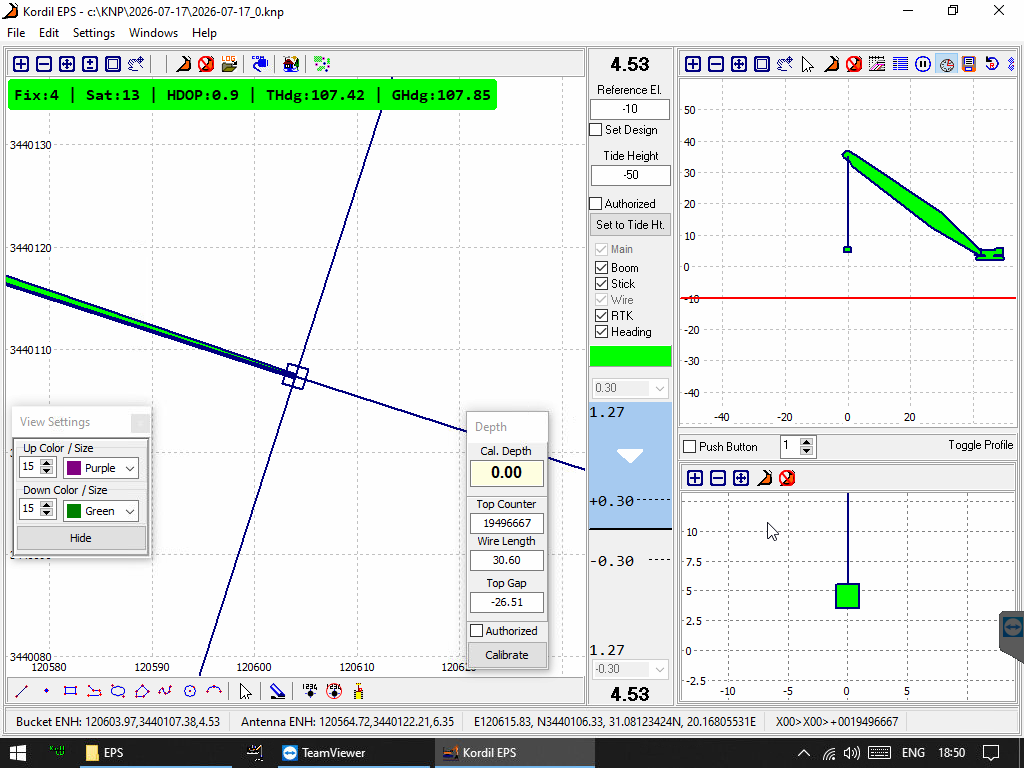
Positioning software example with plan and profile views.
2D option
The 2D option shown below uses Kordil Navigation Pro to display the crane against the project drawing. Boom angle, distance to load and the selected target are presented alongside the plan view. This arrangement provides a clear reference for following the crane and its working point within the design area.
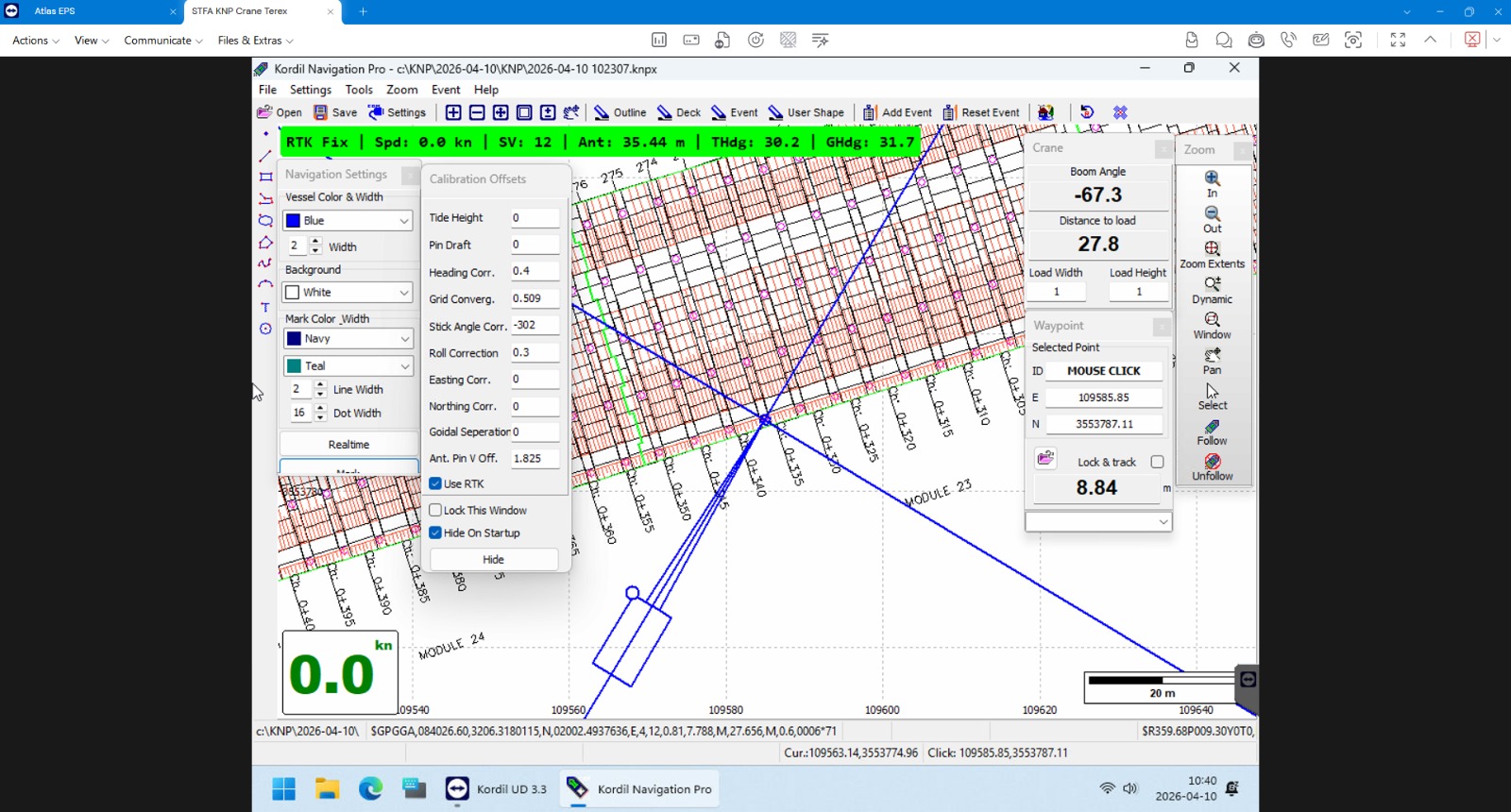
2D option: crane guidance over the project drawing in Kordil Navigation Pro.
Technical specifications
| Horizontal accuracy | ±10 cm with RTK; approximately 1 m with DGPS |
|---|---|
| Vertical accuracy | ±5 cm static with RTK; ±10 cm with DGPS |
| Design data | AutoCAD DXF format |
| Operator input | Pedal or push button for position marking |
| Position information | Boom angle, machine position and rope payout measurements |
| Applications | Land and marine crane operations |
Applications
- Marine and land construction using cranes.
- Filling and material placement.
- Assembly and positioning work.
- Marking and monitoring the operating area.
- Crane operations around dredging and filling areas.
Marine cranes and port construction
Kordil CPS can be configured for cranes working from land or a floating platform. In port construction, the operator needs to relate crane position and reach to the project coordinates while following filling, lifting or placement work. The photographs show different working arrangements, from a crane barge to a crawler crane operating beside the water.
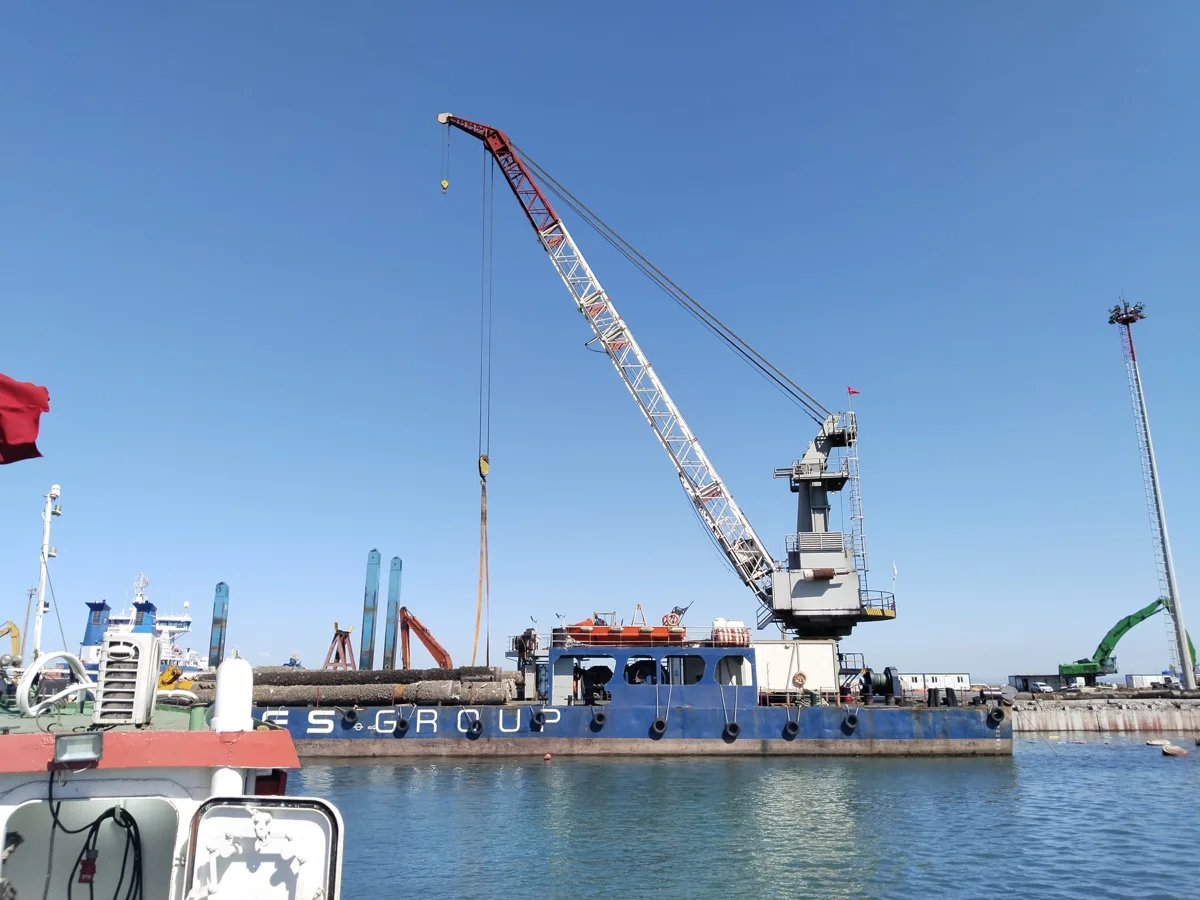
Crane barge operating in a marine construction environment.
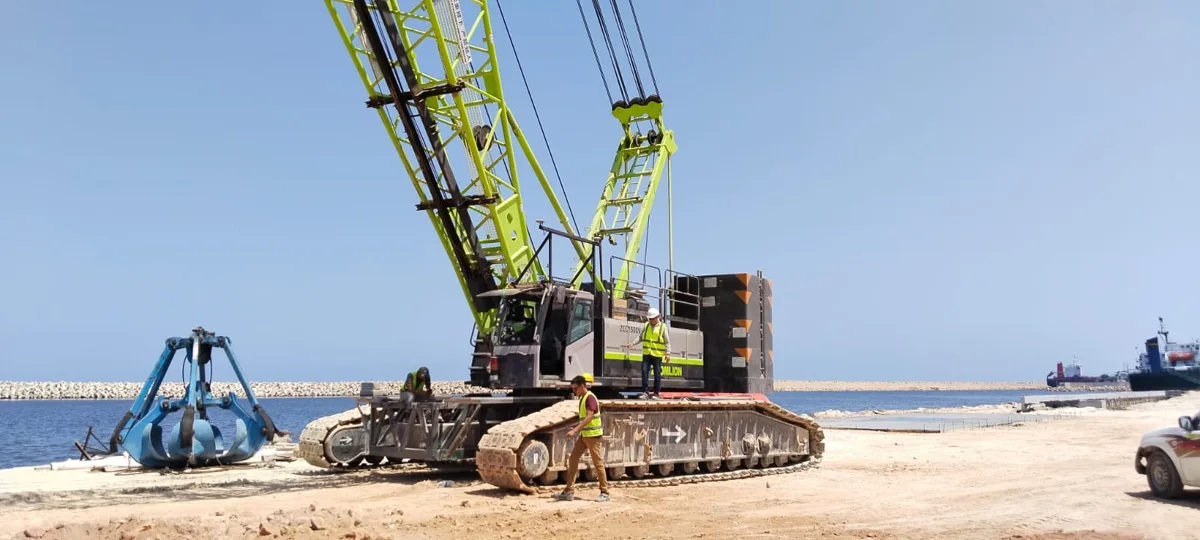
Land-based crawler crane arrangement for coastal works.
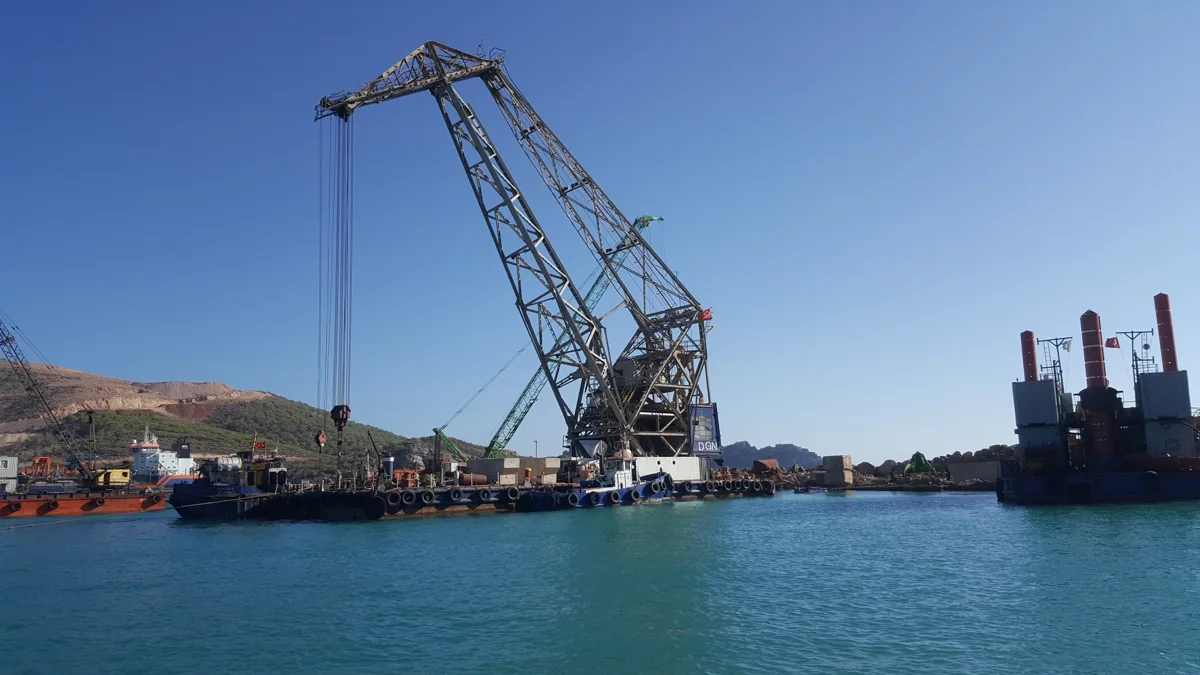
Floating crane application in harbour and coastal construction.
Concrete block and armour unit placement
Breakwater construction involves moving individual concrete units to planned locations along a structure. A positioning display gives the operator a project-based reference while the site team carries out the lifting and placement sequence. Position marking helps identify the working locations and follow progress along the construction area.
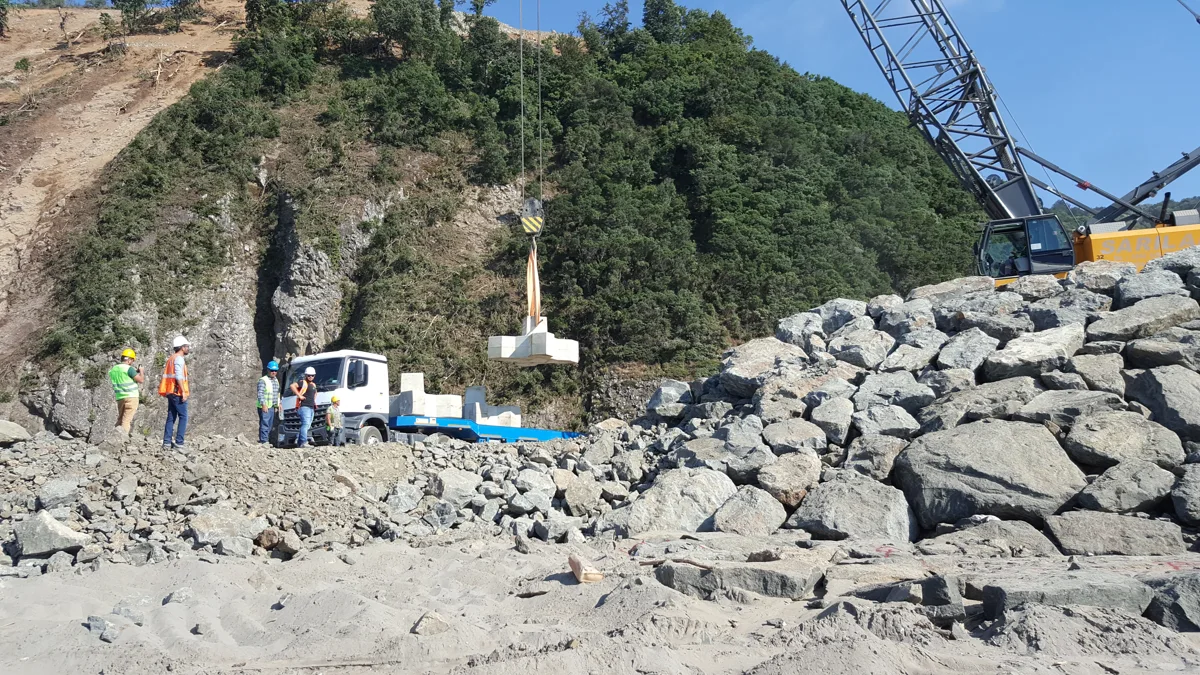
Lifting a concrete unit from the delivery area for placement.
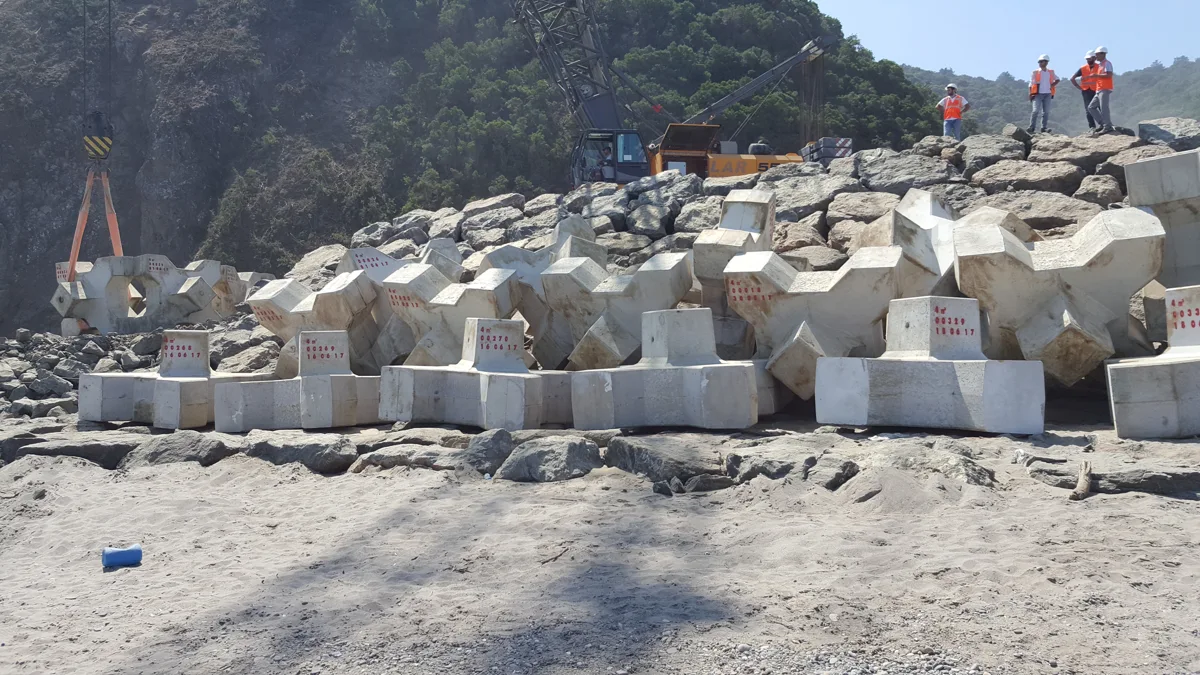
Concrete armour units along the breakwater working area.
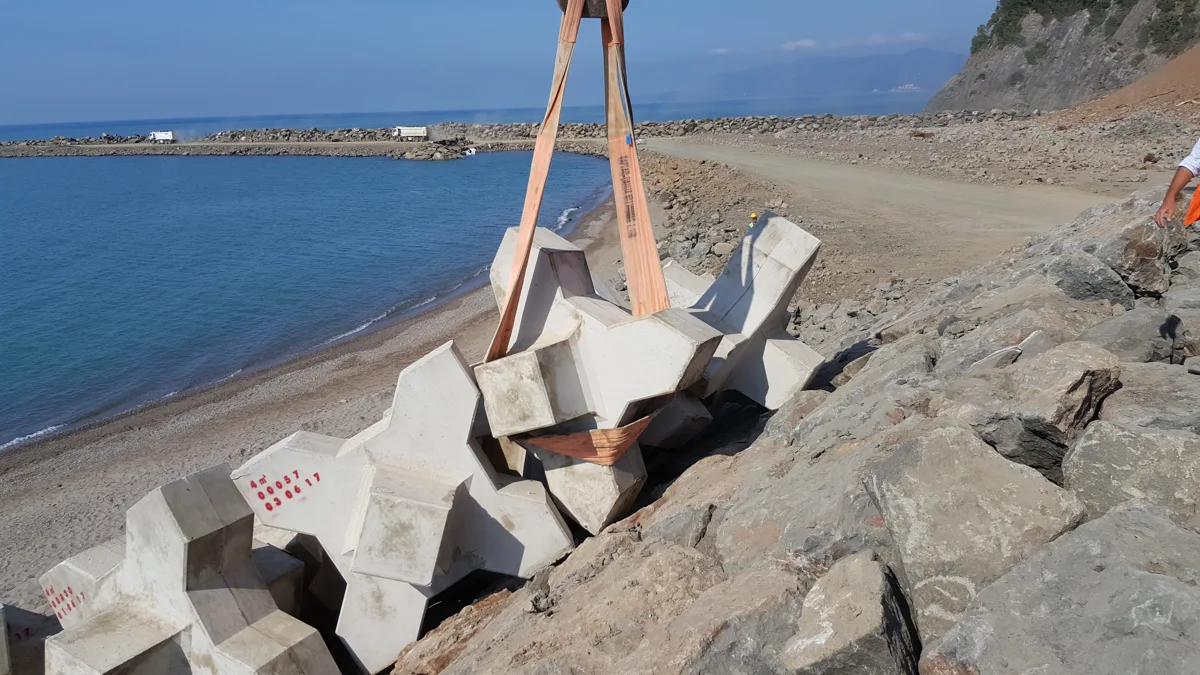
Positioning an individual armour unit on the coastal structure.
Installation and configuration
Kordil CPS uses a robust, custom-designed installation adapted to the crane type and the project. Positioning equipment, sensors, rope measurement and the operator display are arranged around the actual machine. Sensor design is resistant to shocks and impacts encountered during operation.
Configuration and calibration establish the relationship between the crane geometry and its working position. Changes to the machine or working arrangement should be reviewed so that the guidance remains consistent with the installed configuration.
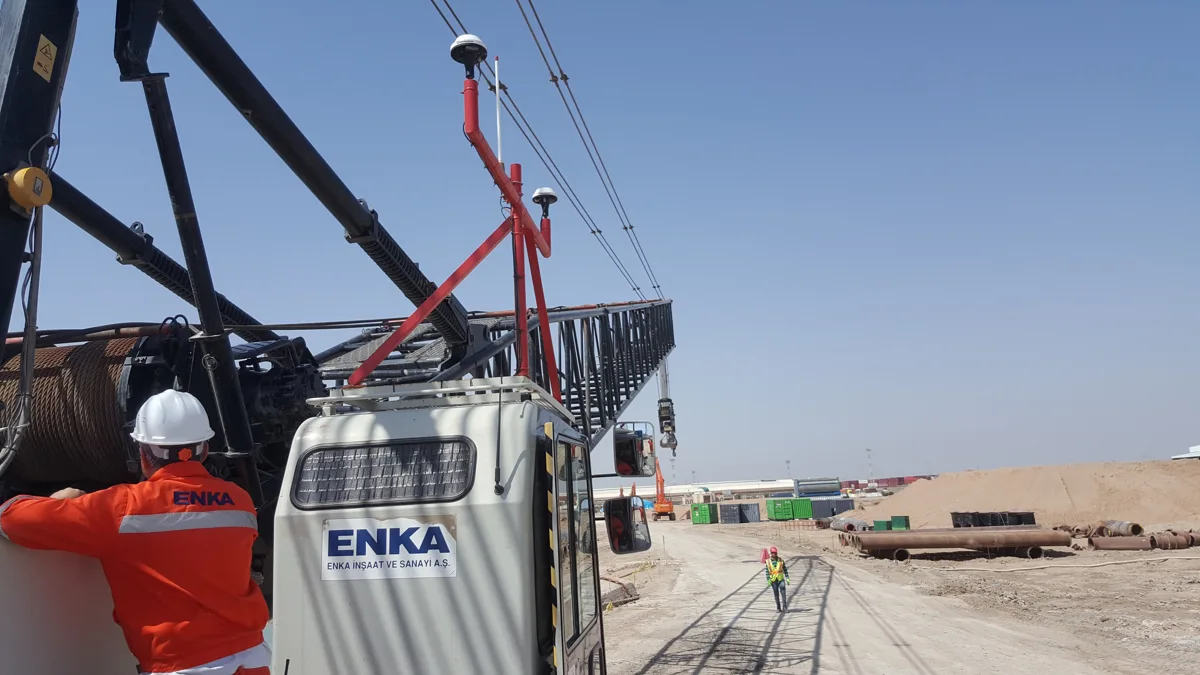
GNSS antenna mounting and sensor installation adapted to the crane.
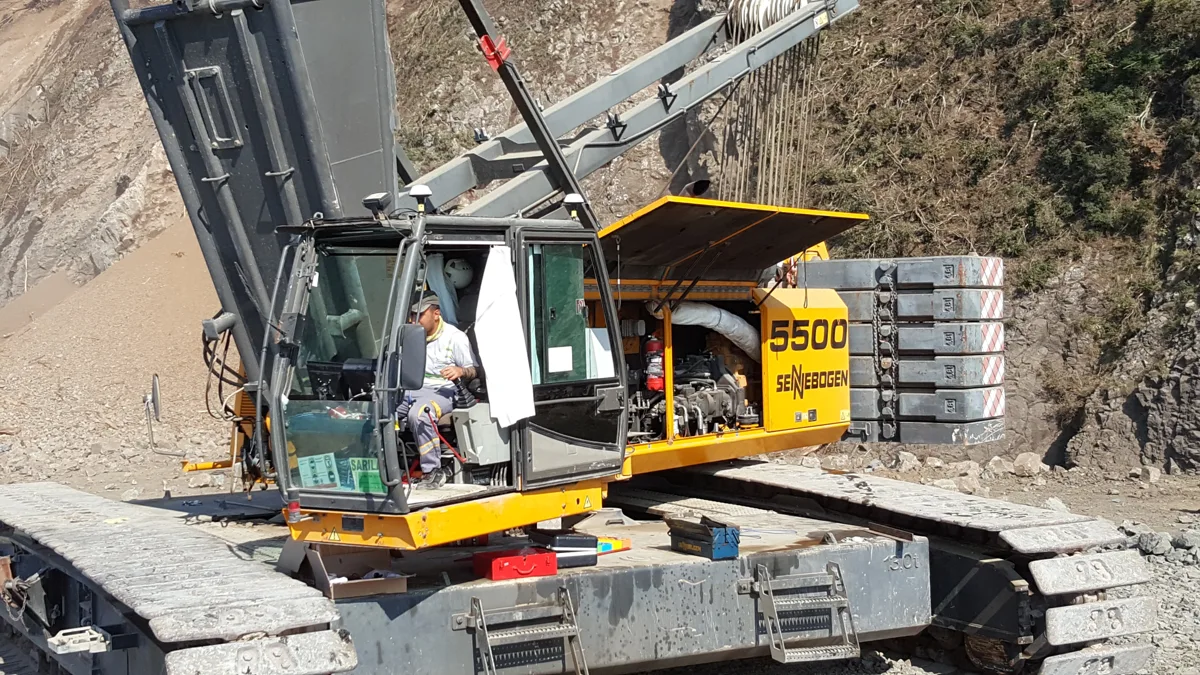
Crane cabin and equipment arrangement during field installation.
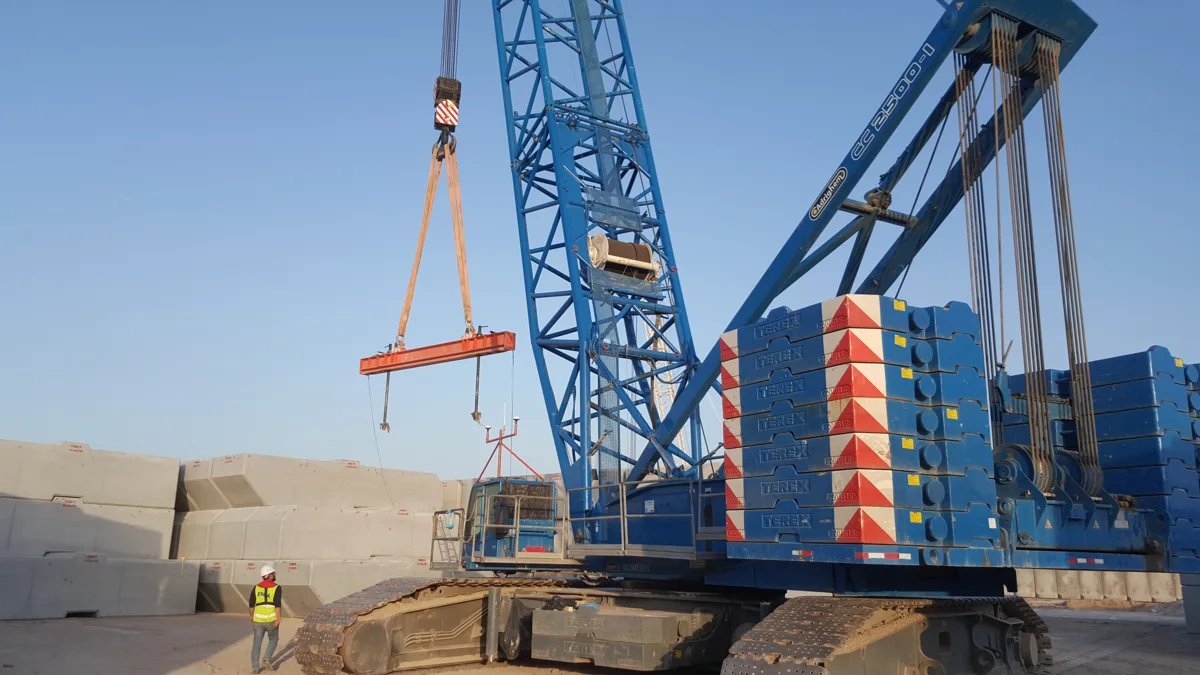
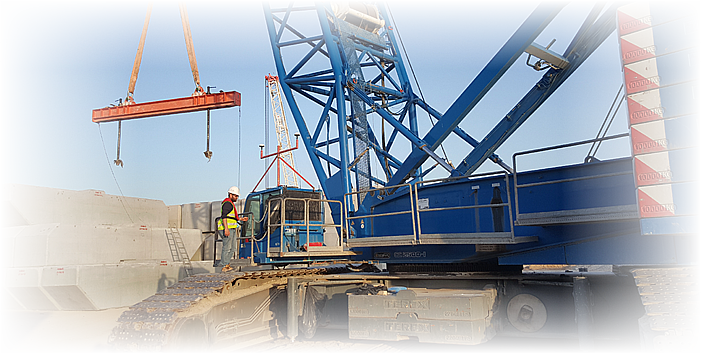
Crane installation with a lifting beam for construction operations.
Key features
- Real-time crane positioning and operator guidance.
- Boom angle and position information on the cabin display.
- Pedal or push-button position marking.
- DXF project data support.
- Custom installation for marine and land cranes.
- Controls arranged for access during continuous crane operations.
- Shock- and impact-resistant sensor design.
- Turkish and English technical support.
Support
Kordil provides Turkish and English technical support for the crane positioning system. Installation and software configuration are selected for the crane and project requirements, with support for maintaining the relationship between the machine, its positioning equipment and the operator display.